Scanning the Worried Well: Inside America's Booming Whole-Body MRI Market
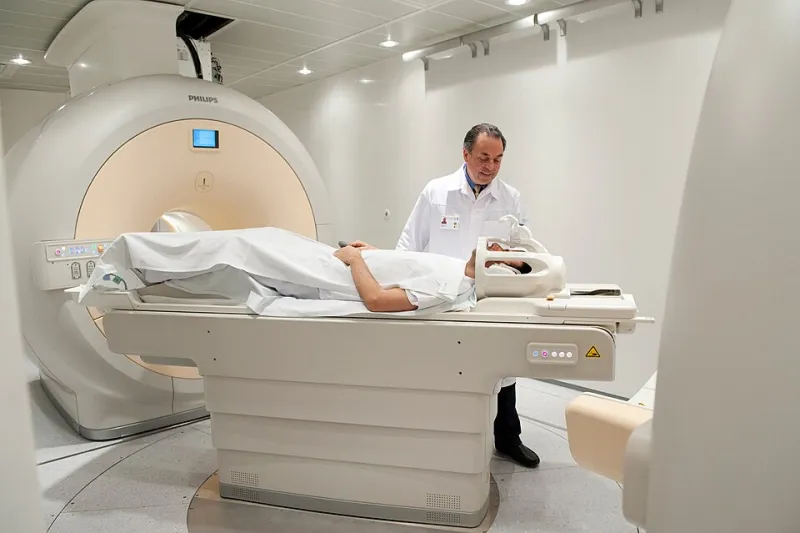
Photo: Nuclear Regulatory Commission from US, Public domain, via Wikimedia Commons
For roughly $1,000 to $2,500, a growing number of American clinics will slide you into an MRI machine and image your body from head to thigh — no symptoms required, no physician referral needed. Celebrity endorsements and venture-backed startups have pushed whole-body screening scans from medical curiosity to consumer trend, marketed as the ultimate act of self-advocacy.
The pitch is seductive: find the silent tumor before it finds you. The reality, according to the specialty societies that represent the radiologists performing these scans, is considerably more complicated.
What Guidelines Actually Say
The American College of Radiology, the American College of Preventive Medicine, and other professional bodies do not recommend whole-body imaging in asymptomatic adults at average risk. This is not bureaucratic conservatism. It reflects decades of evidence about screening: tests must be evaluated not by whether they can find something, but whether finding it improves outcomes.
For specific populations, targeted screening works. Mammography for breast cancer, low-dose CT for eligible smokers, colonoscopy for colorectal cancer — these are evidence-graded interventions with demonstrated mortality benefits. Whole-body MRI has no such evidence base in healthy, average-risk people.
The Incidental Finding Problem
The central issue is what radiologists call incidentalomas: findings that show up on the scan but have nothing to do with why it was ordered. Studies of whole-body MRI in asymptomatic people report incidental findings in a substantial fraction of scans — often 15% or more, with a smaller subset requiring follow-up.
Many of these findings are benign. Small kidney cysts, thyroid nodules, liver lesions, and vertebral anomalies are extraordinarily common in healthy populations. But once seen, they cannot be unseen. Each one typically triggers a cascade: repeat imaging, sometimes contrast-enhanced; biopsies; specialist referrals; and months of waiting for results.
This cascade carries real costs — financial, procedural, and psychological. Biopsies have complication risks. Contrast agents carry a small but nonzero rate of adverse reactions. Follow-up CT scans add cumulative radiation exposure. And the anxiety of a "suspicious finding" that ultimately proves harmless is well documented in the screening literature.
False Reassurance Cuts Both Ways
Advocates sometimes argue that even a low-yield scan offers peace of mind. But a clean scan can produce false reassurance: a normal whole-body MRI does not rule out the diseases most likely to harm you. Cardiovascular disease, the leading cause of death in the United States, may not announce itself on a screening MRI. Nor will the scan substitute for the preventive measures with proven track records — blood pressure control, lipid management, vaccination, and age-appropriate cancer screening.
Conversely, a scan that misses a fast-growing lesion may create unwarranted confidence that delays diagnosis of symptoms that later emerge.
Questions to Ask Before You Book
If you are considering a commercial scan, physicians and health services researchers suggest a short list of questions:
- Has this screening approach been shown in studies to reduce mortality in people like me?
- Who will interpret the scan, and what is the plan if something ambiguous appears?
- Will my insurance cover follow-up testing, and what might that cost out of pocket?
- What is the clinic's rate of incidental findings and downstream procedures?
A legitimate medical provider should be able to answer each one plainly.
The Bottom Line
Whole-body MRI is a remarkable technology with legitimate clinical uses — staging known cancers, evaluating unexplained symptoms, monitoring certain conditions. Selling it as routine prevention for the healthy is a different proposition, one that medical consensus does not currently support. The scan industry profits from the gap between what imaging can see and what it can meaningfully tell you. Consumers deserve to know that the most powerful screening tools remain the unglamorous ones: knowing your family history, completing recommended screenings, and maintaining a relationship with a primary care physician.