Peptides for Sale: How Unverified Compounds Moved From Research Labs to Your Social Media Feed
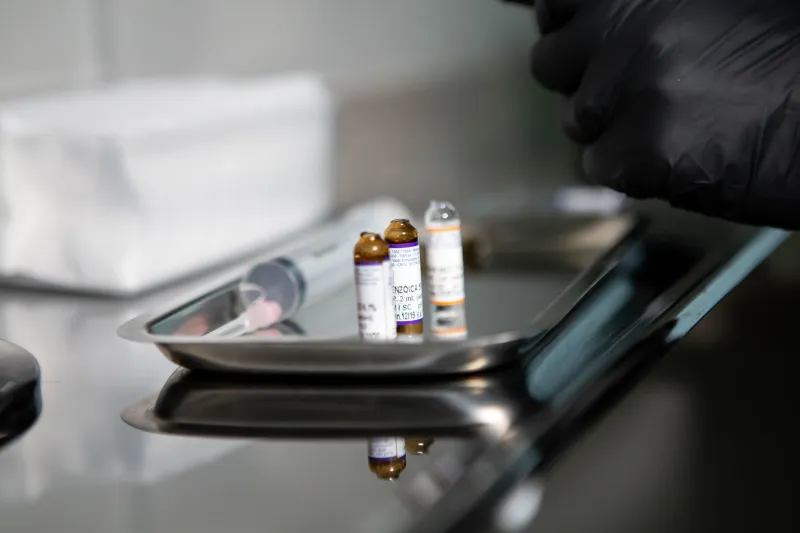
Scroll through fitness content on TikTok or Instagram for long enough and you will encounter a familiar genre: a muscular creator, often shirtless, explaining with casual authority how a specific peptide compound has transformed their physique, recovery, or energy levels. The products referenced — BPC-157, TB-500, CJC-1295, Ipamorelin, and others — carry the language of pharmaceutical precision without the regulatory scrutiny that pharmaceuticals require. They are frequently sold as "research chemicals" or "peptide therapy" supplements, occupying a commercial space that has expanded dramatically in recent years with minimal interference from federal regulators.
Understanding what peptides actually are, what legitimate research demonstrates, and how regulatory gaps have enabled this market to expand unchecked is essential for any consumer navigating these claims.
Defining Peptides: A Primer
A peptide is, at its most basic, a short chain of amino acids — the same building blocks that compose proteins. The distinction between a peptide and a protein is largely one of length: peptides typically consist of fewer than 50 amino acids, while proteins are longer and more structurally complex. The human body produces thousands of peptides endogenously, and many serve critical biological functions as hormones, neurotransmitters, and signaling molecules. Insulin is a peptide. So is oxytocin. So is glucagon.
The pharmaceutical industry has successfully developed peptide-based drugs, including semaglutide — the active compound in Ozempic and Wegovy — which has demonstrated robust clinical evidence for weight management and glycemic control. Legitimate peptide pharmacology is a serious and productive field. The problem is not peptides as a category. The problem is the extrapolation of that scientific credibility to a marketplace of largely untested compounds being sold directly to consumers.
The Specific Compounds Being Marketed
Several peptides dominate the influencer-driven conversation, and it is worth examining what the actual evidence base looks like for each.
BPC-157, or Body Protection Compound 157, is a synthetic peptide derived from a protein found in gastric juice. It has been studied in rodent models for its apparent ability to accelerate wound healing, reduce inflammation, and protect gastrointestinal tissue. These animal studies are genuinely interesting to researchers. However, as of this writing, there are no completed, peer-reviewed randomized controlled trials in humans demonstrating that BPC-157 produces the healing, recovery, or performance effects being claimed by social media promoters. Extrapolating from rat studies to human physiology is not a trivial step, and the wellness industry routinely skips it.
TB-500, a synthetic version of the naturally occurring peptide Thymosin Beta-4, has similarly been studied in preclinical contexts for tissue repair and angiogenesis. Like BPC-157, the human clinical evidence is essentially absent from the commercial conversation.
Growth hormone secretagogues — a class that includes CJC-1295, Ipamorelin, and Hexarelin — stimulate the pituitary gland to release growth hormone. Some of these compounds have undergone clinical investigation, and certain findings are legitimate. But clinical study is not the same as clinical approval, and the doses, protocols, and purity standards used in controlled research settings bear little resemblance to what consumers receive from online vendors.
The Regulatory Architecture — and Its Gaps
The Food and Drug Administration regulates drugs, biologics, and medical devices, and it has jurisdiction over compounds making therapeutic claims. The FDA has issued warning letters to peptide compound sellers and has explicitly stated that many of these substances are not approved for human use. The agency has also noted that the "research chemical" label — a common tactic used to sell these compounds — does not exempt a product from regulatory oversight if it is being marketed for human consumption.
Nevertheless, enforcement has not kept pace with the market's growth. The peptide supplement industry has expanded into a multi-hundred-million-dollar sector, with online pharmacies, compounding pharmacies, and direct-to-consumer vendors operating across the country. Compounding pharmacies occupy a particularly complicated regulatory position: they are permitted to prepare customized drug formulations for individual patients under physician prescription, but the FDA has expressed concern that some compounding facilities are producing bulk peptide compounds for non-patient-specific distribution.
In 2023 and 2024, the FDA moved to restrict the compounding of several peptides, including BPC-157 and TB-500, by removing them from lists of substances eligible for compounding. These actions signal regulatory concern, but enforcement gaps remain significant.
What Legitimate Peptide Research Actually Shows
It would be inaccurate to suggest that all peptide research is without merit. The clinical evidence supporting semaglutide and related GLP-1 receptor agonists is substantial. Peptide-based treatments for rare diseases, including certain growth hormone deficiencies and metabolic disorders, have undergone rigorous clinical development. Research into peptides for wound healing and tissue regeneration continues in academic and pharmaceutical settings.
What distinguishes legitimate peptide research from the influencer marketplace is methodological rigor: human clinical trials, peer review, regulatory oversight, standardized dosing, and transparency about adverse effects. The peptides being sold to consumers via social media referrals lack this infrastructure almost universally.
The Influencer-to-Consumer Pipeline
The mechanism by which unverified compounds reach mass audiences is worth examining directly. Fitness influencers with large followings — sometimes in the millions — present peptide use as an extension of biohacking culture, framing their personal experimentation as evidence. Testimonials replace trials. Before-and-after photographs substitute for control groups. The parasocial trust that audiences place in creators they follow daily becomes a more powerful sales driver than any peer-reviewed publication.
This is not a new phenomenon in health marketing, but the speed and scale at which social media amplifies these messages has no historical precedent. A single viral video can introduce millions of viewers to a compound that has never been studied in a human being.
What Consumers Should Know
Peptide compounds sold outside of FDA-approved pharmaceutical channels carry meaningful risks. Purity and dosing accuracy cannot be guaranteed from unregulated vendors. The long-term effects of many of these compounds in humans are genuinely unknown. Interactions with medications or underlying health conditions have not been studied. And the biological plausibility of a mechanism — even a real one — does not confirm that a compound will work as advertised at the doses being sold.
For consumers interested in evidence-based approaches to muscle building, recovery, and metabolic health, the interventions with the strongest clinical support remain nutrition, resistance training, adequate sleep, and stress management. These are less exciting than a peptide protocol, but they are supported by decades of controlled research rather than a 60-second video.