Can Seeds Regulate Your Hormones? Endocrinology Examines the Seed Cycling Trend
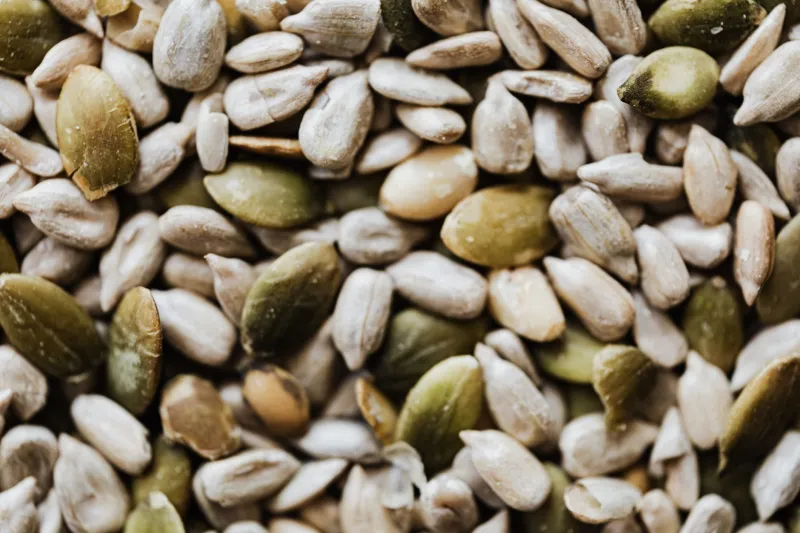
Seed cycling — the practice of consuming specific seeds during different phases of the menstrual cycle to regulate estrogen and progesterone — has become one of the more persistent hormone health trends circulating among wellness influencers and natural health communities across the United States. The protocol is typically presented with reassuring precision: one to two tablespoons each of flaxseeds and pumpkin seeds during the follicular phase (days one through fourteen), then sesame and sunflower seeds during the luteal phase (days fifteen through twenty-eight). Proponents attribute a broad range of benefits to this regimen, including reduced PMS symptoms, improved fertility, more regular cycles, and relief from menopausal symptoms.
The claims are specific, the protocols are detailed, and the nutritional science of seeds themselves is genuinely interesting. But endocrinology offers a far more sobering assessment of whether any food-based intervention can meaningfully shift the hormonal dynamics of the menstrual cycle.
The Proposed Mechanism: What Seed Cycling Claims to Do
To evaluate seed cycling fairly, it is necessary to understand the biological argument being made by its advocates. The core claim rests on two nutritional properties: the phytoestrogen content of certain seeds, particularly flaxseeds, and the fatty acid and micronutrient profiles of all four seeds involved.
Flaxseeds are among the richest dietary sources of lignans — a class of polyphenols that function as phytoestrogens, meaning they can weakly bind to estrogen receptors in the body. Pumpkin seeds are cited for their zinc content, which is claimed to support progesterone production. During the luteal phase, sesame seeds — also containing lignans — are said to help modulate estrogen, while sunflower seeds, with their vitamin E content, are claimed to support progesterone synthesis.
The theoretical scaffolding has a surface plausibility. Phytoestrogens are real. Zinc does play a role in reproductive physiology. Vitamin E has antioxidant properties. The question is whether consuming tablespoon quantities of seeds at specific cycle phases produces measurable, clinically meaningful changes in circulating hormone levels in healthy women.
What Endocrinology Tells Us About Hormonal Regulation
The menstrual cycle is governed by a tightly coordinated hormonal cascade involving the hypothalamus, the pituitary gland, and the ovaries — a system endocrinologists refer to as the hypothalamic-pituitary-ovarian (HPO) axis. This axis responds to feedback signals from estrogen and progesterone with extraordinary sensitivity, adjusting the secretion of gonadotropin-releasing hormone (GnRH), follicle-stimulating hormone (FSH), and luteinizing hormone (LH) in ways that maintain reproductive function across a wide range of dietary and environmental conditions.
The HPO axis evolved to be robust. Significant caloric restriction, extreme weight loss, and intense endurance exercise can disrupt it — these are substantial physiological stressors. The notion that consuming two tablespoons of flaxseeds can meaningfully shift estrogen levels in a healthy woman with a functioning HPO axis is not well supported by what we know about hormonal regulation. The body's feedback systems are designed to buffer against exactly these kinds of small perturbations.
Reviewing the Available Research
Direct clinical research on seed cycling as a complete protocol is essentially nonexistent. There are no randomized controlled trials examining whether the seed cycling regimen, as practiced by its proponents, produces measurable changes in estrogen or progesterone levels, cycle regularity, or symptom burden in human subjects. This is a foundational evidentiary gap that wellness advocates have not addressed.
The supporting research cited by seed cycling proponents is typically drawn from studies on individual components — flaxseed lignans, phytoestrogen effects, or fatty acid metabolism — conducted in different contexts and for different purposes. A study examining the effects of concentrated flaxseed supplementation on hormone levels in postmenopausal women, for example, is a different scientific question from whether tablespoon quantities of ground flaxseed consumed during the follicular phase alter estrogen dynamics in a cycling woman in her twenties.
Research on dietary phytoestrogens more broadly does suggest modest effects on certain hormonal markers in specific populations, particularly postmenopausal women or those with estrogen-related conditions. A 2007 study in the Journal of the American Dietetic Association found that flaxseed supplementation was associated with modest changes in urinary estrogen metabolite ratios in premenopausal women. However, changes in metabolite ratios are not equivalent to clinically meaningful improvements in cycle regularity, fertility, or PMS severity, and the study was not examining seed cycling as a protocol.
Separating Seed Nutrition From Seed Cycling Claims
The nutritional value of seeds is not in dispute, and this is an important distinction. Flaxseeds, pumpkin seeds, sesame seeds, and sunflower seeds are all nutrient-dense foods. They provide dietary fiber, healthy fats including omega-3 and omega-6 fatty acids, protein, and a range of micronutrients including magnesium, zinc, and vitamin E. Regular consumption of these foods as part of a balanced diet is consistent with general dietary guidance and may contribute to overall health in ways that have indirect relevance to hormonal wellbeing.
But there is a meaningful difference between "seeds are nutritious" and "seeds consumed according to a phase-specific protocol will balance your hormones." The wellness industry frequently conflates these two propositions, using the legitimate nutritional properties of a food to imply a specific therapeutic mechanism that has not been clinically demonstrated.
The Appeal of Hormonal Narratives
Understanding why seed cycling resonates with so many women requires some intellectual honesty about the state of conventional medicine. Conditions like premenstrual dysphoric disorder (PMDD), polycystic ovary syndrome (PCOS), endometriosis, and perimenopausal symptoms are frequently undertreated or inadequately addressed in clinical settings. Women seeking relief from genuine and significant symptoms often turn to alternative approaches when conventional medicine falls short.
Seed cycling fills a narrative need: it offers agency, a specific protocol, natural ingredients, and a framework for understanding hormonal health. These are not trivial psychological benefits. But the absence of clinical evidence means that women managing genuine endocrine conditions may delay or forgo evidence-based interventions — including hormonal therapies, lifestyle modifications with demonstrated efficacy, or specialist referral — in favor of a seed protocol that has not been validated.
What Evidence-Based Hormonal Support Looks Like
For women experiencing menstrual irregularities, significant PMS, or symptoms consistent with hormonal imbalance, the appropriate starting point is evaluation by a board-certified gynecologist or endocrinologist. Laboratory assessment of hormonal status provides actual data rather than inference from symptoms. Interventions with established clinical evidence include hormonal contraceptives for cycle regulation and PMS management, lifestyle modifications including exercise and stress reduction for their well-documented effects on the HPO axis, and dietary approaches supported by broader nutritional research.
Adding seeds to a nutritious diet is unlikely to cause harm and may contribute positively to overall nutrient intake. What it is not, on the current evidence, is a hormone-balancing protocol. Conflating the two does a disservice to the women who deserve accurate information about their reproductive health.