Activated Charcoal: What Emergency Medicine Knows That Wellness Brands Don't
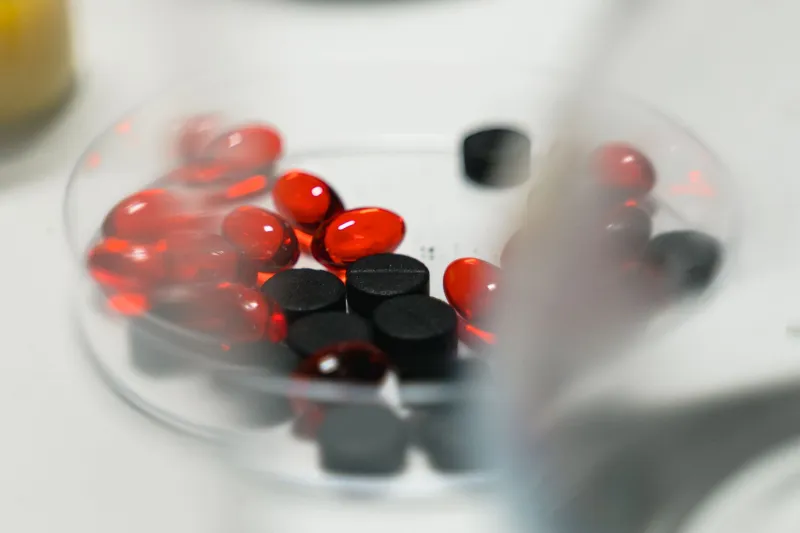
Walk into any Whole Foods, scroll through a wellness influencer's feed, or browse the supplement aisle at your local pharmacy, and you will almost certainly encounter activated charcoal. It appears in everything from jet-black smoothies to face masks, toothpaste, capsules, and bottled water. The marketing language is consistent and confident: it "detoxifies," it "cleanses," it "purifies." What that language rarely includes is any acknowledgment of what the science actually demonstrates — and, just as importantly, what it does not.
Activated charcoal does have a real, rigorously validated role in medicine. Understanding where that role begins and ends is the most important step in evaluating the sweeping claims attached to consumer wellness products.
What Activated Charcoal Actually Is
Activated charcoal is not the same material used in a backyard grill. It is produced by heating carbon-rich substances — wood, coconut shells, peat, or coal — at extremely high temperatures in an oxygen-limited environment, then "activating" the resulting char through exposure to steam or chemical agents. This process creates an extraordinarily porous material with a vast internal surface area. A single gram of activated charcoal can have a surface area exceeding 500 square meters, depending on the manufacturing process.
That surface area is the key to its function. Activated charcoal works through a process called adsorption — distinct from absorption — in which molecules bind to the surface of the charcoal rather than being absorbed into it. Certain chemical compounds bind to activated charcoal with considerable affinity, which is precisely why it has a legitimate place in clinical settings.
The One Context Where the Science Is Solid
In hospital emergency departments across the United States, activated charcoal has been used for decades as a treatment for certain types of acute poisoning or drug overdose. When administered orally within a narrow time window — generally within one to two hours of ingestion — it can bind to specific toxic substances in the gastrointestinal tract before they are absorbed into the bloodstream, reducing the systemic impact of the poison.
The American Academy of Clinical Toxicology has published position statements acknowledging this use, though with important caveats. Activated charcoal is not effective against all poisons. It does not bind well to alcohols, heavy metals like iron or lithium, or caustic substances. Its effectiveness diminishes rapidly after the initial ingestion window. And it is not appropriate for all patients, particularly those with compromised airways or reduced consciousness.
This is a precise, conditional, medically supervised application. It is a far cry from daily supplementation or topical skincare.
The Detox Claim: A Concept Without a Mechanism
The most pervasive wellness claim attached to activated charcoal products is that they "detoxify" the body. This assertion has two significant problems: it rarely specifies which toxins are being removed, and it does not account for how the human body actually manages waste.
The liver and kidneys are the body's primary filtration systems. They process metabolic byproducts, environmental compounds, and pharmaceutical agents continuously and efficiently in healthy individuals. There is no credible scientific evidence that orally consumed activated charcoal supplements meaningfully assist this process in people who are not experiencing acute poisoning.
Furthermore, the adsorption properties that make activated charcoal useful in emergency toxicology create a genuine concern in supplemental use: activated charcoal does not selectively bind to harmful substances. It can also bind to nutrients, vitamins, and prescription medications, potentially reducing their absorption. For individuals taking daily medications — including oral contraceptives, heart medications, or antiepileptics — this interaction is not trivial. It represents a documented pharmacological risk.
Digestive Health Claims Under the Microscope
Some activated charcoal products are marketed for digestive complaints, particularly gas and bloating. The evidence here is marginally more nuanced, but still underwhelming for routine use.
A small number of older studies suggested that activated charcoal might reduce intestinal gas production in certain contexts. However, subsequent and more rigorous research has not consistently replicated these findings, and major gastroenterological associations do not recommend activated charcoal as a standard treatment for gas or bloating. The American College of Gastroenterology's clinical guidelines do not include it among evidence-based interventions for common digestive complaints.
For individuals with specific, diagnosed gastrointestinal conditions, self-treating with activated charcoal supplements — particularly without physician guidance — carries the same nutrient and drug interaction risks described above.
Skincare and Topical Products: A Different Calculus
Activated charcoal's presence in facial cleansers, masks, and scrubs operates on a somewhat different scientific logic, and the risk profile is lower when the product is not ingested. The rationale is that the adsorptive properties of charcoal might help draw out excess sebum, surface-level impurities, or environmental particulates from pores.
The honest assessment is that the clinical evidence for topical activated charcoal skincare is thin. There are very few well-designed, peer-reviewed studies specifically examining activated charcoal as a dermatological ingredient. Most dermatologists note that while charcoal-based cleansers are unlikely to cause harm for most skin types, their performance relative to well-studied alternatives — salicylic acid cleansers, bentonite clay masks, or established acne treatments — has not been demonstrated to be superior.
The striking black color of these products also functions as powerful visual marketing. It creates an impression of potency that the ingredient data does not necessarily support.
Why the Wellness Industry's Borrowing of Clinical Credibility Matters
There is a recognizable pattern in how certain ingredients migrate from clinical medicine into consumer wellness culture. Activated charcoal follows it closely. A substance with a legitimate, context-specific medical application is identified, its mechanism is stripped of its conditions and caveats, and it is repositioned as a broadly beneficial wellness tool. The clinical credibility travels with the ingredient, even when the application no longer resembles the validated use.
This matters for two reasons. First, consumers may spend meaningful money on products that deliver little beyond a placebo effect. Second, and more consequentially, some consumers may use these products in ways that interfere with medications or displace more effective interventions for genuine health concerns.
The Bottom Line
Activated charcoal is a chemically interesting material with a well-earned place in emergency toxicology. That place is specific, conditional, and supervised by medical professionals. The wellness industry has taken that clinical legitimacy and applied it to an entirely different set of claims — daily detoxification, digestive wellness, skin clarity — for which the supporting evidence is either absent, weak, or actively contradicted by known pharmacological interactions.
For healthy adults not experiencing acute poisoning, the body's own filtration systems are doing the work that charcoal supplement labels imply they cannot do alone. Before incorporating activated charcoal products into a daily health routine, particularly for anyone taking regular medications, a conversation with a physician or pharmacist is not just advisable — it is the evidence-based choice.